Biological Safety Cabinets
Biological Safety Cabinets (BSCs) are the primary means of containment for working safely with biohazardous material. BSCs are available that either exhaust to the outside or recirculate HEPA filtered air to the laboratory.
Types of Biological Safety Cabinets
Two classes of BSCs are described in this section, Class I and Class II. When combined with appropriate microbiological techniques, each class provides different levels of protection. Volatile and hazardous chemicals are not permitted in BSCs unless they are specifically designed for that purpose and are properly vented, and then only small amounts are allowed, with safe amounts determined by risk assessment. (see BMBL). All BSCs use HEPA filters to treat exhaust air. Class II cabinets filter both exhaust and intake air to protect the worker and the environment from contamination as well as to protect product in the cabinet.
Class I Biological Safety Cabinets
Class I cabinets provide worker and environmental protection, but no product protection. Air drawn across the interior work surface is not HEPA filtered. There is a HEPA filter in the exhaust system to protect the environment. Class I cabinets may be used to enclose equipment or procedures with a potential to generate aerosols such as tissue homogenization, sonication, or cage dumping.
Class II Biological Safety Cabinets
Class II biological safety cabinets provide worker, environmental, and product protection. Both room air and interior cabinet air are drawn into a front grille creating an air barrier that provides personnel protection. In addition, downward laminar flow of HEPA-filtered air provides product protection. Air exhaust passes through a certified exhaust HEPA filter; it is particulate-free (environmental protection), and may be recirculated back into the laboratory (Type A1 and A2 BSCs without canopy unit) or discharged from the building via a canopy or “thimble” connected to the building. Exhaust air from Types B1 and B2 BSCs must be discharged directly to the outdoors via a hard connection.
The table below describes the various types of biological safety cabinets and the acceptable uses of each.
| Type | I | II, A1 | II, A2* | II, B1 | II, B2 |
|---|---|---|---|---|---|
| Worker Protection | Yes | Yes | Yes | Yes | Yes |
| Product Protection | No | Yes | Yes | Yes | Yes |
| Environment Protection | Yes | Yes | Yes | Yes | Yes |
| Volatile Toxic Chemicals and Radionuclides | When exhausted to outdoors1,2 | Yes (in minute amounts) 1,2 | When exhausted to outdoors1, 2 | Yes (in minute amounts) 1,2 | Yes (in minute amounts) 1,2 |
| Nonvolatile Toxic Chemicals & Radionuclides | Yes | Yes (in minute amounts) | Yes | Yes | Yes |
| Airflow Pattern | In at front through HEPA to the outside or into the room through HEPA | 70% recirculated to the cabinet work area through HEPA; 30% balance exhausted through HEPA back into the room or to outside through a canopy unit | Similar to II, A1, but has 100 lfm intake air velocity exhaust air can be ducted to the outside through a canopy unit | 30% recirculated, 70% exhausted. Exhaust cabinet air must pass through a dedicated, internal cabinet duct to the outside through a HEPA filter | No recirculation; total exhaust to the outside through a HEPA filter |
| Face Velocity | 75 | 75 | 100 | 100 | 100 |
2 A risk assessment should be completed by laboratory and safety facility personnel to determine amounts to be used. In all cases, only the smallest amounts of the chemical(s) required for the work to be performed should be used in the BSC. In no instance should the chemical concentration approach the lower explosion limits of the compounds. Source: Biosafety in Microbiological and Biomedical Laboratories, 6th Edition
Before Work Is Started
- Remove all unnecessary equipment and supplies from the cabinet, as clutter alters air flow. Check that air grilles are clear.
- Turn on blower before using the BSC to remove particulates in the cabinet. Wait at least five minutes.
- Wipe down surface of cabinet interior with disinfectant.
- Prepare a checklist of materials necessary for the activity. Place supplies and needed equipment in the BSC before beginning work to minimize the number of arm-movement disruptions across the air barrier of the cabinet. Only items required for the immediate work should be placed in the BSC.
- Place decontaminating solution inside the cabinet to facilitate quick clean-up of spills. Do not hang disinfectant bottle on outside grill of the BSC.
- Wipe the exterior of supplies with a disinfectant, particularly containers removed from a water bath. Segregate items that will remain clean from the ones that may become contaminated.
- Wear appropriate protective equipment for the work being done.
- Adjust stool height so that your neck and face are above the sash opening.
While Working in the Cabinet
- In order to prevent air disturbances that can breach the air barrier, never have more than one person at a time use a cabinet.
- Delay manipulation of materials for approximately one minute after placing the hands/arms inside the cabinet. Do not rest arms on the front grill. Raising arms slightly will lessen disruption of air flow.
- Work as far back in the cabinet as practical — at least four inches inside the front grille edge.
- Move arms slowly and limit arm movement in and out of cabinet.
- As a general rule of thumb, the work flow should be from "clean to contaminated or dirty (e.g., from left to right) ". Working in the BSC eliminates the need to flame bottlenecks when pouring liquid. Remove media with vacuum and replace with serological pipettes.
- Do not hang bottles of disinfectant from the front grille. The disinfectant bottle should be kept inside the BSC until all items have been disinfected and removed.
After Work Is Complete
- Wipe down the surfaces of all containers and equipment with an appropriate disinfectant and remove from the cabinet.
- Leave blower on for several minutes with no activity so that any airborne contaminants will be purged from the work area.
- Wipe down the cabinet interior with disinfectant.
- Remove gloves and wash hands.
Tips to Prevent Contamination
- Lab coat and sleeves can introduce contaminants to biological safety cabinets and incubators. Use coats designated for working in the biological safety cabinet or tissue culture area and launder frequently. Use disposable sleeve guards if contamination has been a problem.
- Do not leave flasks of waste media in cabinet. Clean after every use.
- On a regular basis, decontaminate under the air grilles and wherever parts are removable. Media is commonly splattered on the front grille, allowing fungus to grow undetected on the under surface of the grill.
- Decontaminate the surface of carts or trays used to transfer culture flasks between the incubator and the biological safety cabinet or microscope.
- Keep pipette aids cleaned, especially the nosepiece, and replace filters regularly. Do not store pipette aids or carousel in the BSC.
- Clean and disinfect vacuum tubing.
- Place only the items necessary to carry out the work inside of the cabinet. The fewer items, the better the air flow, decreasing the likelihood of contamination.
- Do not alter a BSC in anyway such as taping items to the inside of the cabinet walls.
- Do not store any items in the BSC. Disinfect and remove all items once the work is complete.
BSC Placement
Air currents can disrupt the effective operation of biological safety cabinets.
Locate cabinets:
- away from doors and windows that can be opened
- heavily traveled laboratory areas, and
- potential disruptive equipment such as fans, air conditioners, and ventilation systems
Biological safety cabinets should be installed in such a manner that fluctuations of the room supply and exhaust air do not cause the cabinet to operate outside its containment parameters.
A 12–14 inch clearance above the cabinet is required to provide for accurate air velocity measurement across the exhaust filter surface and for exhaust filter changes. When the BSC is hard-ducted (direct-connected) or canopy connected to the ventilation system, adequate space must be provided so that the configuration of the ductwork will not interfere with airflow. The canopy unit must provide adequate access to the exhaust HEPA filter for testing.
Whenever possible, adequate clearance should be provided behind and on each side of the cabinet to allow easy access for maintenance and to ensure that the cabinet air re-circulated to the laboratory is not hindered.
BSC Vacuum Lines
All vacuum lines should be protected from contamination and fluid intake.
Protecting the Vacuum System
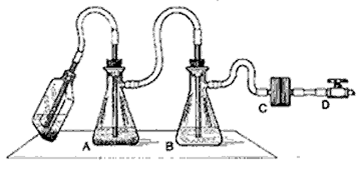
Inactivation of aspirated materials can be accomplished by placing sufficient chemical decontamination solution into the flask to kill microorganisms as they are collected. Once inactivation occurs, liquid materials can be disposed of as noninfectious waste.
BSC Certification
The operational integrity of a new BSC must be validated before it is put into service or after a cabinet has been repaired or relocated. Manipulating a BSC may break the HEPA filter seals or otherwise damage the filters or the cabinet.
Biological safety cabinets in laboratories and in animal care facilities approved for BSL2 experiments must be tested and certified annually by a qualified service person. Each BSC will be certified annually by the UND Office of Safety. Any repairs or additional maintenance work must also be contracted outside the University and paid for by the department.
The University does not endorse any specific certification service, but the certifiers must hold NSF-49 certification. The following companies offer BSC services in the region:
| Company | Phone | Location | |
|---|---|---|---|
| BioCert Testing | (612) 730-9285 | kurt@biocerttesting.com | Burnsville, Minnesota |
| Brager Scientific | (763) 586-0635 | Pam@BragerScientific.com | River Falls, Wisconsin |
| CSI Testing, Inc. | (763) 383-9535 | sales@csitesting.com | Plymouth, Minnesota |
| Health Systems Sciences, LLC | (507) 594-9395, ext 101 | certify@hssciences.com | Mankato, Minnesota |
BSC Maintenance
BSCs must be cleaned and decontaminated:
- after working with a biohazardous agent
- when a spill within has occurred.
- at the completion of the work day
BSC Decontamination and Decommissioning
BSCs shall be decontaminated by gas or vaporized hydrogen peroxide per NSF/ANSI Standard 49 guidelines by a NSF-Field certifier before the cabinet is:
- Relocated
- Repaired
- Taken out of service
Decontamination is also recommended as a prudent practice after a gross spill of infectious material or before the cabinet activity is changed from work with moderate-risk or high-risk infectious materials to work with noninfectious materials.
All biological safety cabinets must be decontaminated prior to disposal or surplus. Contact a NSF-Field certifier to schedule for gaseous decontamination of the BSC. For gaseous decontamination, the BSC will need to be placed in a room with a fume hood accessible to proceed with gas exhaust from the BSC. The room will also need to be unoccupied while the gas decontamination is underway (allow 24 hours). Once the cabinet is cleared for disposal, a UND decontamination statement will be placed on it by the Office of Safety, it will be removed from inventory, and Facilities Management can notified of disposal or surplus.
BSC UV Lights
Many BSCs are equipped with ultraviolet (UV) lights as a form of decontaminant and should not be used as the sole disinfection method in the BSC. However, if good practices are followed, UV lights are not needed to protect tissue culture or other work from contamination. UV radiation should not take the place of wiping down the cabinet interior with a suitable disinfectant or the practice of good aseptic technique. If you wish to use UV lamps, acquaint yourself with their limitations and hazards:
- UV light is effective only when it directly hits a microbial cell. UV light is ineffective when the target material is encased in organic matter. Also, UV lamps must be cleaned regularly to remove any dust and dirt that may block its germicidal effectiveness. Turn off the light and wipe it with 70% ethanol every two weeks.
- Lights need to be replaced periodically. The length of time a lamp will be effective depends on the number of hours it is in use. Lamps should be checked periodically with a meter to ensure that the appropriate intensity of UV light is being emitted.
- UV light does not penetrate cracks or seams, so it will not disinfect the spill area under the work surface.
- Due to mercury content, UV lights need to be disposed of as hazardous waste.
- UV exposure can burn corneas and cause skin cancer; therefore, the UV light must be turned off when the room is occupied.
- Be aware that UV lights can cause gas line tubing to deteriorate and present a gas leak hazard.
BSC Use of Open Flames
Current construction codes prohibit the installation of natural gas lines to biological safety cabinets. Gas lines are not being removed from existing cabinets, but their use is not recommended per CDC guidelines. This is due, in part, to the risk of gas from leaks becoming concentrated because of air recirculation in the cabinet.
Small electric furnaces are available for decontaminating bacteriological loops and needles and are preferable to an open flame inside the BSC. Disposable sterile loops can also be used.
Shielded electric incinerators or hot bead sterilizers are good alternatives to open flames to sterilize surgical instruments, biological loops, and needles.