General Lab Safety
There are certain expectations for all laboratories to follow. General lab expectations include prioritizing safety by wearing appropriate personal protective equipment (PPE) like lab coats, gloves, and eye protection, and adhering to safety protocols. It also involves maintaining a clean and organized workspace, proper handling and disposal of chemicals, and being aware of emergency procedures. Additionally, it's crucial to be mindful of others in the lab and to avoid eating, drinking, or working alone when handling hazardous materials. The following resources and procedures provide additional details on general laboratory safety expectations.
Resources & Procedures
Proper use of laboratory equipment is essential for ensuring safety, accuracy, and efficiency in scientific experiments.
General Use Guidelines
- Training: All laboratory personnel must receive comprehensive training on the operation of equipment, safety protocols, and emergency procedures. This training should cover the hazards associated with the equipment and proper usage techniques to minimize risks
- Manufacturer's Instructions: Always review and follow the instructions provided in the manufacturer’s manuals and standard operating procedures. These documents should be easily accessible to all laboratory personnel
- Personal Protective Equipment: Use appropriate PPE, including lab coats, safety goggles, and gloves, to protect against potential hazards. Regularly inspect and replace PPE to ensure it remains effective
- Maintenance and Inspections: Routine maintenance and regular inspections of laboratory equipment are crucial for safety and efficiency. This includes checking for wear and tear, calibrating instruments, and ensuring that all safety devices are functional.
A laboratory audit is an assessment performed to demonstrate that the laboratory’s operations are according to regulatory standards and accreditation regulations. It ensures that the laboratory has quality systems in place, follows good laboratory practices, and generates data of integrity and quality. The audit allows the laboratory to understand how well it is performing when compared to a benchmark or standard, and any gaps or nonconformities in performance can show if the policies and procedures that the laboratory has set require revision or are not being followed.
- Lab audits are conducted at least annually for basic laboratory safety, covering general safety and health hazards as well as the proper handling and disposal of hazardous materials. Additional audits may occur if a laboratory uses materials that represent a high risk to workers or to the environment, such as any radiation or select agent use.
- It is the responsibility of the principal investigator or responsible party assigned to each space to respond to lab audit findings within in a timely manner. Failure to comply with this expectation may affect the approval of future protocols.
- Results of the laboratory audits will be shared with the Principal Investigator and the Department Chair.
Laboratory signs and labels communicate critical safety information about hazards, protective measures, emergency stations, and prohibited actions to ensure a safe working environment in labs.
Lab Safety Information Door Sign
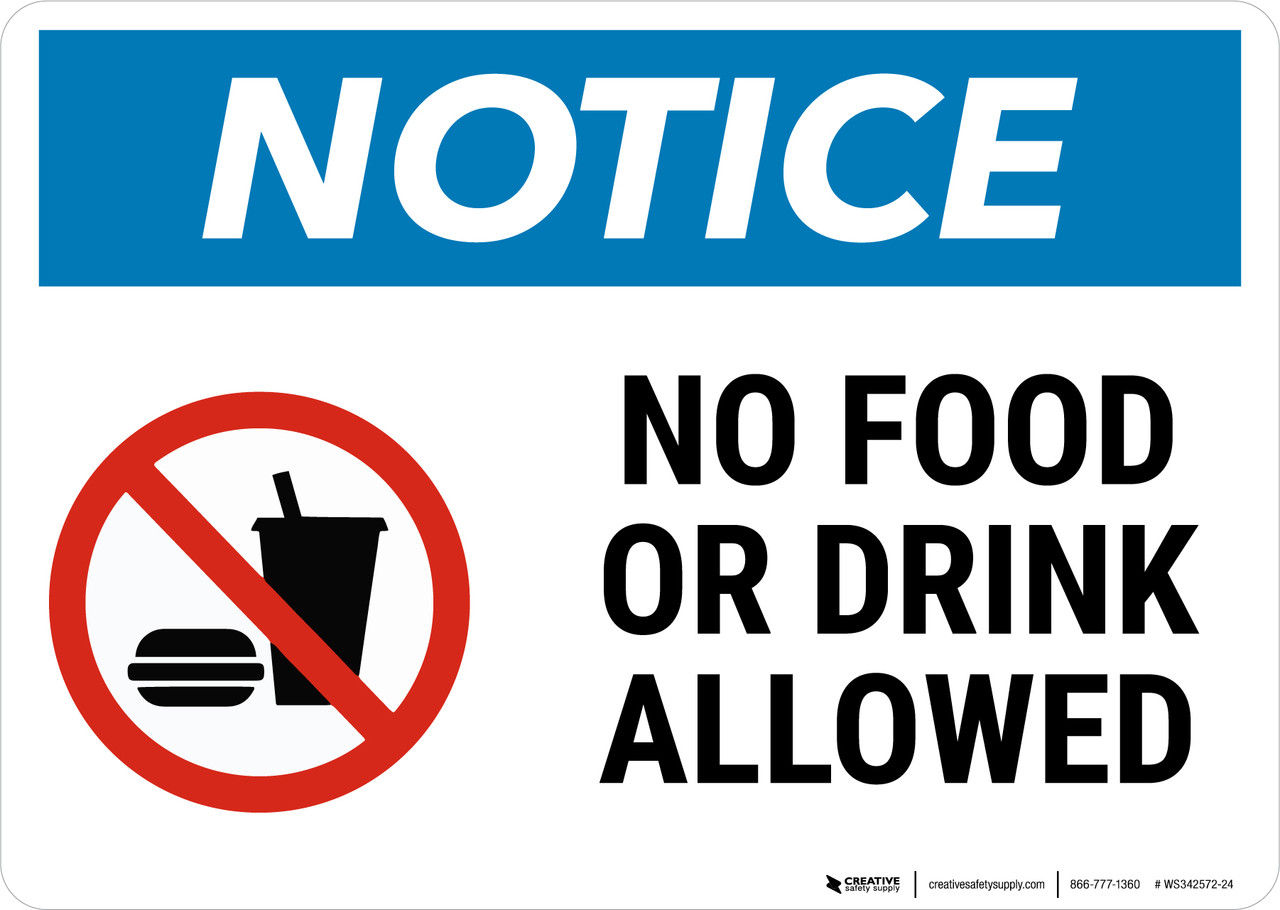
No Food or Drink
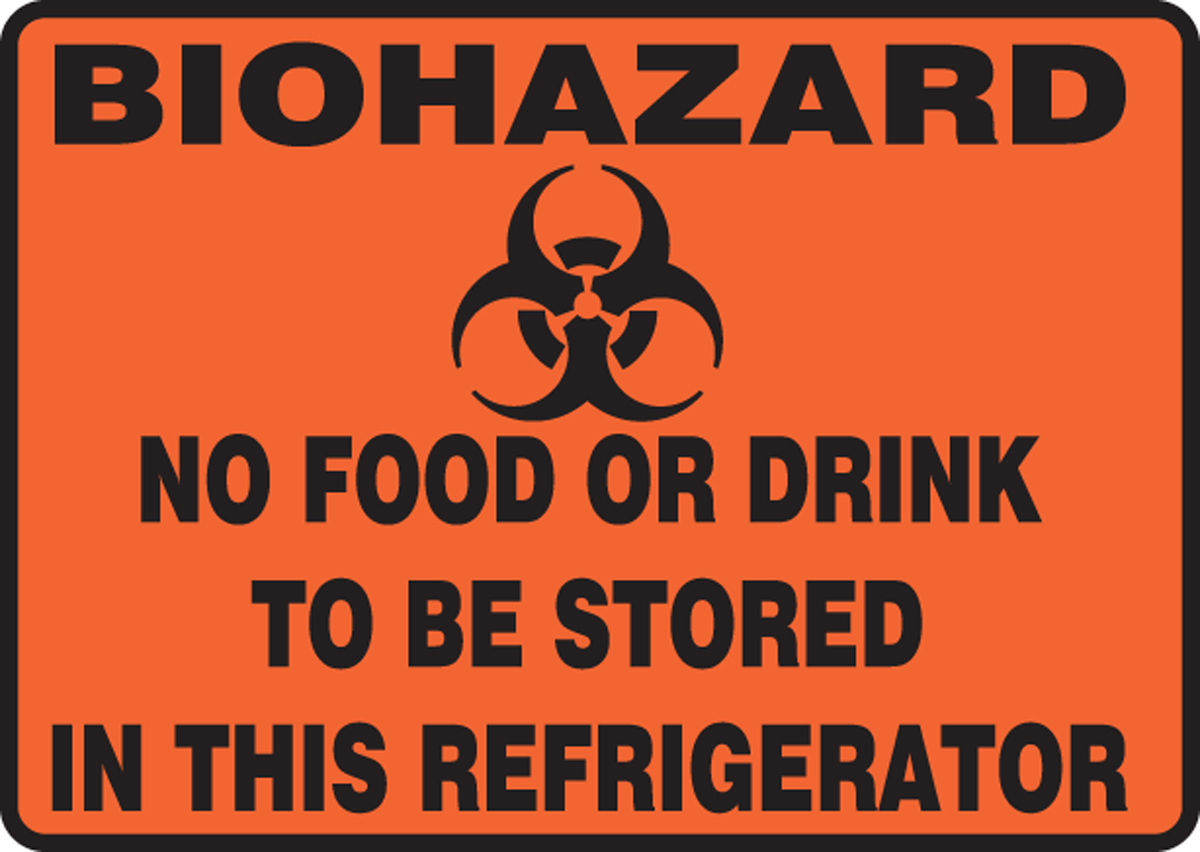
All Refrigerators, Freezers, and Microwaves within the laboratory space should be labeled to indicate that they are not to be used for food or drink. For Example:
Biohazard
And, if biological materials are stored in the unit, that should be indicated as well:
Ice Machines
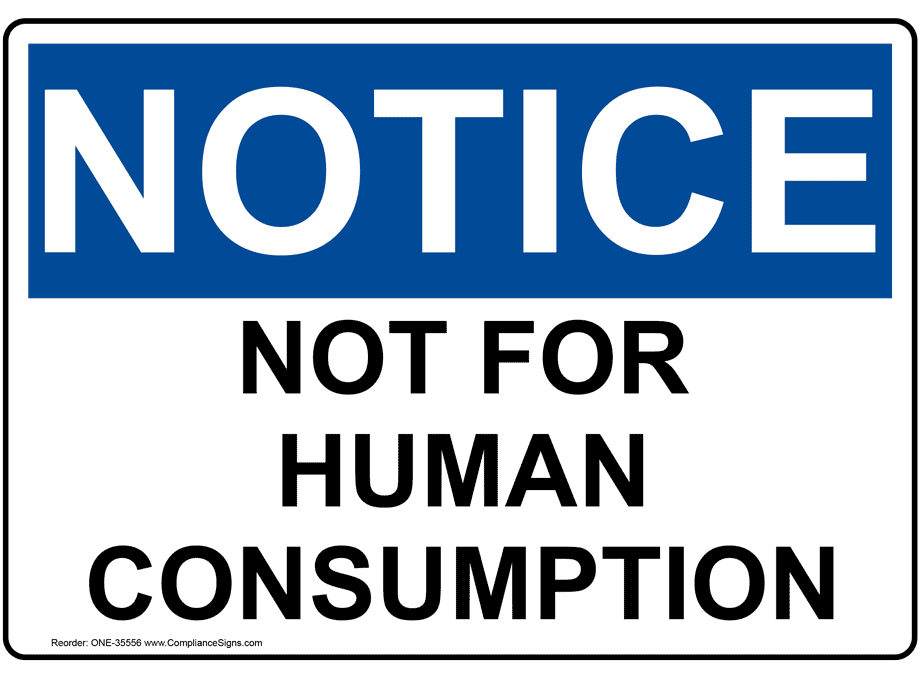
Ice machines should also be labeled:
 NOTE: These are examples of labels that could be used, there are many different labels
available that would accomplish this requirement.
NOTE: These are examples of labels that could be used, there are many different labels
available that would accomplish this requirement.
Personal Protective Equipment (PPE) is equipment worn to minimize exposure by creating a barrier between you and a hazard. Personal protective equipment is not a substitute for good engineering, administrative controls, or good work practices. PPE is used in conjunction with these controls to ensure safety and health. Examples of PPE include respirators, gloves, aprons, as well as fall, head, eye and foot protection. PPE does not reduce the hazard itself, nor does it guarantee permanent or total protection. PPE is merely used to reduce or minimize the exposure or contact to injurious physical, chemical, or biological agents.
Responsibility
Each department is responsible for assessing work areas to determine if hazards are present that would necessitate the use of personal protective equipment. When such hazards exist, the department is responsible for defining what PPE is required and for communicating the requirements to those who are affected.
If you need any assistance regarding PPE, consult your supervisor, instructor, or contact Office of Safety at 701.777.3341.
A Lab-Specific Safety Manual is a tailored document that combines general safety policies with laboratory-specific hazard information, procedures, and training requirements to ensure regulatory compliance and protect all lab personnel.
Sharps are any object capable of penetrating the skin, including, but not limited to: needles, scalpels, broken glass, broken capillary tubes, razor blades, saw blades, and exposed ends of dental wires. Dispose of sharps in impervious, puncture resistant, rigid containers to eliminate the potential of physical injury. Label all sharps containers that are disposed of in building waste receptacles (e.g., broken glass, sharps, etc.). It is each department's responsibility to assure that sharps are not put into the regular garbage, or other regular waste receptacles, in a loose or unprotected state.
When the disposal of sharps is complicated by the presence of radioactive, hazardous chemical, or bio-hazardous contamination, the proper disposal steps for each must be taken once the sharps have been placed in the proper container and labeled. Sharps containers contaminated with radioactive, hazardous, chemical, or bio-hazardous materials must be labeled with the appropriate hazard symbol (e.g., radioactive, bio-hazardous, corrosive, etc.).
For further information on the disposal of sharps, please contact the Office of Safety at 701.777.3341
A laboratory risk assessment is a systematic process for identifying hazards, evaluating risks, implementing control measures, and monitoring the risks and risk control measures to ensure safety in laboratory settings.
Step 1. Gather Information
- What biological agents will be handled and what are their pathogenic characteristics?
- What chemicals will be used and what hazards to they pose?
- What type of laboratory work and/or procedures will be conducted?
- What type(s) of equipment will be used?
- What type of laboratory facility is available?
- What human factors exist (for example, what is the level of competency of personnel)?
- What other factors exist that might affect laboratory operations (for example, legal, cultural, socioeconomic, public perception)
Step 2. Evaluate the Risks
- How could an exposure and/or release occur?
- What is the likelihood of an exposure and/or release?
- What information gathered influences the likelihood the most?
- What are the consequences of an exposure and/or release?
- Which information/factor influences the consequences the most?
- What is the overall initial risk of the activities?
- What is an acceptable risk?
- Which risks are unacceptable?
- Can unacceptable risks be controlled, or should the work not proceed at all?
Step 3. Develop a Risk Control Strategy
- What resources are available for risk control measures?
- What risk control strategies are most applicable for the resources available?
- Are resources sufficient to obtain and maintain those risk control measures?
- Are proposed control strategies effective, sustainable and achievable in the local context?
Step 4. Select and Implement Risk Control Measures
- Are there any national/international regulations requiring prescribed risk control measures?
- What risk control measures are locally available and sustainable?
- Are available risk control measures adequately efficient, or should multiple risk control measures be used in combination to enhance efficacy?
- Do selected risk control measures align with the risk control strategy?
- What is the residual risk after risk control measures have been applied and is it now acceptable?
- Are additional resources required and available for the implementation of risk control measures?
- Are the selected risk control measures compliant with national/international regulations?
- Has approval to conduct the work been granted?
- Have the risk control strategies been communicated to relevant personnel?
Have necessary items been included in the budget and purchased? - Are operational and maintenance procedures in place?
- Have personnel been appropriately trained?
Step 5. Review Risks & Risk Control Measures
- Have there been any changes in activities, biological agents, personnel, equipment or facilities?
- Is there any new knowledge available of biological agents and/or the processes being used?
- Are there any lessons learned from incident reports and investigations that may indicate improvements to be made?
- Has a periodic review cycle been established?
UND Laboratory Risk Assessment Tool
IBC Protocol Risk Assessment and Determination of NIH Guidelines
Laboratory Move-Ins
Laboratory Close-Outs
Laboratories within the University of North Dakota must be left in a state suitable
for new occupants or for renovation activities. The vacating Principal Investigator
(PI) and Department are responsible for ensuring the cleaning and disinfection of
equipment and counters, movement of equipment from the lab as surplus, repair, or
relocation, and disposal of chemical, biological, and radioactive waste materials
prior to vacating the space.
If disposal of hazardous materials at closeout requires removal services from an outside
contractor, the responsible department will be charged for this service. Any regulatory
action or fines resulting from improper management or disposal of hazardous materials
will accrue to the responsible department. Additionally, if cleaning or disinfection
of the vacated laboratory requires university resources atypical of ordinary processes,
costs of the processes may be brought forward to the responsible department.
Responsibilities
- Office of Safety will provide proper guidance for laboratory closeout. The Office of Safety will do a final walk through of the laboratory to be vacated to ensure all items were taken care of. This walk-through may include the Departmental Chair and/or another Departmental Representative.
- Departments are responsible for ensuring that all Principal Investigators are aware of and follow these guidelines to ensure laboratory clearance by the Office of Safety. Departments are ultimately responsible for the proper clearance of laboratory space and equipment that was assigned to the individual PIs. If items are left behind and the responsible PI cannot be determined, the Department Chair will assume responsibility for the proper closeout of the laboratory. Departments need to notify the Office of Safety of moves and close outs as soon as this information is known to allow them to coordinate the lab close out with the PI.
- Principal Investigator(s) are responsible for the safe operation of their laboratory or laboratories. This includes leaving any and all of these facilities in a clean and safe condition when the premises are vacated. The PI needs to inform their Department Chair and the Office of Safety of the impending move at least one month before the date.
Chemicals
- Ensure that all containers of chemicals are labeled with the name of the chemical.
- Confirm that all containers are securely closed.
- Empty beakers, flasks, evaporating dishes, etc.
- Check refrigerators, freezers, fume hoods and bench tops as well as storage cabinets for chemical containers.
- Hazardous chemical wastes must not be sewered or trashed; they must be collected for disposal by the Office of Safety.
- Determine which chemicals are usable and transfer responsibility for these materials to another party who is willing to take charge of them. Ensure the transfer is properly documented by transferring the chemical to the recipient’s chemical inventory.
- If a new user cannot be found, the materials should be disposed of as hazardous waste by submitting a Chemical Waste Manifest form to the Office of Safety. This process requires a particular time allotment and should be started at least one (1) month before departure from the laboratory. Chemical pickup must be completed before the laboratory is vacated.
- Remove all contaminants from fume hood surfaces, chemical cabinets, and counter tops.
Controlled Substances
- Dispose of controlled substances following federal guidelines and the UND Use of Controlled Substances Policy. Keep the substances locked appropriately until they are picked up for disposal.
- The Registrant must send a letter to the Minneapolis DEA office requesting cancellation of the DEA registration and informing them of the drug disposal. Include in the letter the name of the Registrant, DEA registration number and expiration date, lab/building address, effective date of the cancellation, and Social Security Number of the Registrant.
- If applicable, send unused DEA Form 222 to the Minneapolis DEA office via certified or registered mail. In your cover letter to the DEA, list the unique numbers on Form 222 and save a copy of the letter in your controlled substances records.
Gas Cylinders (if no other user available)
- Remove gas connections and replace cylinder caps.
- Return gas cylinders, whether empty or partially filled, to the manufacturer or distributor through which they were purchased/rented. Ensure that you receive a return receipt from the vendor and retain this receipt in Department records.
- If possible, use all remaining gas in a cylinder to render it empty. Empty cylinders should be clearly marked as empty to avoid confusion when it comes to return or disposal of the cylinder. Do not vent full or partially used cylinders into fume hoods as a means of disposal.
- In the event it is not possible to return the cylinders as specified above, contact
the Office of Safety.
Human and Animal Tissue
- If samples must be saved, locate an appropriate researcher to take responsibility
for them and notify your Department Head and the UND IBC as to who is taking responsibility
for them.
- Remove fixed tissue from preservative before disposal.
- Dispose of chemical preservatives as hazardous chemical waste (see Chemical Disposal
above).
- Dispose of animal tissue and remains appropriately by submitting as biological waste
to the Office of Safety or by contacting the Center for Biomedical Research as appropriate.
- Defrost, clean, and disinfect refrigerators and freezers.
- If appropriate biological waste disposal is uncertain, contact the Lab & Research Safety Officer at 7-2444.
Microorganisms/Cultures, Recombinant DNA, and Toxins of Biological Origin
- If samples or stocks must be saved, locate an appropriate researcher to take responsibility
for them and notify your Department Head and the UND IBC as to who will take responsibility.
- If microorganism stocks/cultures, recombinant DNA, or biologically derived toxins
are moved or destroyed, notify the Lab & Research Safety officer at 701.777.3341.
- If an autoclave is available to decontaminate biological waste, place all microorganism
stocks and culture plates in an autoclavable bag and proceed with decontamination
under appropriate autoclave conditions. If no autoclave is available, place material
in a red biohazard bag and submit a Biological Waste Manifest form to initiate pick
up by the Office of Safety.
- For toxins of biological origin, contact the Biological Safety Officer for proper
disposal.
- Decontaminate liquid biological wastes and disinfect all potentially contaminated
surfaces.
- Clean and decontaminate incubators, drying or curing ovens, refrigerators and freezers.
If providing equipment for moving or surplus, attach the required Decontamination
Statement (UND Form 205a) to the equipment.
- If appropriate biological waste disposal is uncertain, contact the Lab & Research
Safety Officer at 701.777.3341.
Radioactive Materials
Prior to closeout of a radioactive materials use area and/or a radioactive materials use permit, it is the responsibility of the department and the authorized permit holder to assure that the following steps have been completed:
- Package all radioactive materials (stock vials, sealed sources, lead containers/shields,
and wastes) per UND’s Radiation Safety Program Manuel for pickup.
- Prior to transferring radioactive materials to a new location, notify the Radiation
Safety Officer (RSO 7-5931) to obtain authorization for the transfer and to assure
that the new use area is properly posted and permitted.
- Arrange for pickup of all radioactive wastes through the RSO. Complete a Waste Disposal
Form/Manifest for pickup.
- Contact the RSO to discontinue radiation badge dosimetry.
- Following removal of all radioactive wastes and stock materials, perform a contamination
survey (and if appropriate a GM instrument survey) of all former storage and use areas
within the laboratory or under the permit to be closed out. NOTE: Areas of potential
residual contamination include refrigerators/ freezers, centrifuges, water baths,
hoods, sinks, floor areas under waste containers, etc. Also, if there are contaminated
areas or equipment in the laboratory, they must be decontaminated. A follow-up survey
must be made of the decontaminated areas and the results included in the above survey.
- Provide the Department Head and the RSO with a copy of the final contamination survey.
- Schedule the Radiation Safety closeout survey with the RSO. Do not allow further use of room until the closeout survey is complete and the radiation caution door posting is removed by the RSO.
- If the permit holder fails to satisfactorily complete the above steps, the Department will be responsible for the completion of (or payment of costs to complete) the required closeout steps. The Department is responsible for immediate notification of the RSO if the above steps have not been completed.
Mixed Hazards
Occasionally it is necessary to dispose of materials that contain more than one of
these hazards (chemical, radioactive or biological agent) Contact the Office of Safety.
Equipment
- If laboratory equipment is to be left for the next occupant, clean and/or decontaminate
it before departing the laboratory.
- If laboratory equipment is to be transferred to another department, room, or building,
ensure appropriate documentation is submitted to the originating department for inventory
tracking.
- If laboratory equipment is to be discarded or surplussed, be aware that capacitors,
circuit boards, transformers, mercury switches, mercury thermometers, radioactive
sources and chemicals must be removed before disposal. Contact the Office of Safety.
- If exhaust or filtration equipment has been used with extremely hazardous substances
or organisms, alert the Office of Safety.
- Equipment potentially contaminated with radioisotopes should be surveyed by the RSO.
Shared Storage Areas
Of particular concern are shared storage units such as refrigerators, freezers, cold
rooms, stock rooms, waste collection areas, etc., particularly if no one has been
assigned to manage the unit. Departing researchers must carefully survey any shared
facility in order to locate and appropriately dispose of their hazardous materials.
Pregnant lab workers should take particular care whenever working with hazardous materials to prevent or minimize potential exposures to themselves or their unborn child. Exposure to certain chemicals (e.g., mutagens, teratogens or embryo-toxins), as well as certain biologics and radiation / radioactive materials can harm the unborn child.
Safety training is vital for lab personnel to prevent accidents, injuries, and exposure to hazardous materials. By educating employees on best practices and safety protocols, labs can minimize risks and create a safe work environment. Safety training also helps ensure compliance with regulatory requirements, such as those set forth by the Occupational Safety and Health Administration (OSHA).